

Walk into any thriving dog daycare in Covington, Florence, or across the river in Cincinnati on a Tuesday morning, and you’ll find a symphony of controlled chaos. There’s the rhythmic clicking of nails on polished floors, the enthusiastic barking of a Lab greeting a regular, and the focused energy of a staff member managing a group play session. To the outside observer, it looks like pure joy. To you, the owner, it’s a high-stakes balancing act of safety, sanitation, and logistics.
You’ve built more than just a business; you’ve built a community hub for pet parents who treat their dogs like family. But here’s the reality that many Kentucky pet care entrepreneurs face: the very things that make your business special, the group play, the overnight stays, the grooming add-ons, are the same things that standard, “off-the-shelf” insurance policies often fail to protect.
At Adkisson Insurance Agency, we’ve seen how the “one-size-fits-all” approach to commercial insurance leaves massive gaps for pet care professionals. If you’re operating a facility in the Bluegrass State or the Northern Kentucky/Greater Cincinnati area, understanding the nuances of specialized coverage isn’t just a luxury, it’s the fence that keeps your business from wandering off into a legal thicket.
The “General Liability” Myth: Why Your Policy Might Be Too Thin
Many business owners in our region assume that if they have a General Liability (GL) policy, they’re “fully covered.” It’s a common misconception, and it’s one we approach with a lot of curiosity because GL is, admittedly, the foundation of any good plan. However, for a dog daycare, GL is like a rain jacket that only covers your torso; it leaves your arms and legs completely exposed to the elements.
General Liability is designed to protect you if a human slips on a wet floor in your lobby or if you accidentally damage a client’s laptop while they’re checking in. It is not designed to cover the very core of your business: the animals themselves.
In a standard GL policy, dogs are often classified as “property.” If a scuffle breaks out in a play yard and a Golden Retriever ends up needing $3,000 in emergency surgery, a standard policy may deny the claim because the “damage” happened to “property” in your care. This is where specialized animal-to-animal liability becomes non-negotiable.

Animal Bailee: The Heart of Pet Care Protection
If you take one term away from this article, let it be this: Animal Bailee coverage (often referred to as Care, Custody, and Control).
In legal and insurance terms, a “bailee” is someone who has temporary possession of someone else’s property. Because the law views pets as property, you are the bailee of every dog in your facility. If a dog escapes your fenced yard, gets sick due to an overlooked dietary restriction, or is injured during an overnight stay, standard insurance views this as a failure of your “care, custody, and control.”
Without specific Animal Bailee coverage, you could be personally responsible for:
-
Emergency veterinary bills and follow-up care.
-
The replacement cost of a specialized service animal.
-
Legal defense fees if a distraught pet owner decides to sue for negligence.
We’ve seen cases in the Cincinnati area where a simple kennel cough outbreak, despite a facility’s best cleaning efforts, led to thousands of dollars in vet bills for multiple clients. A custom policy recognizes that even with perfect protocols, animals are unpredictable. It provides the financial cushion to make things right with your clients without draining your business savings.
The Kentucky Regulatory Maze: From Lexington to Scott County
Operating in Kentucky adds a layer of complexity that national insurance carriers often overlook. While there isn’t a single “one-size-fits-all” statewide kennel license for every city, the local requirements can be a minefield.
For instance, if you’re operating in Lexington-Fayette County, you’re looking at an annual kennel license fee that scales based on how many dogs you house, anywhere from $75 for a small pack to $250 for larger facilities. Cross over into Scott County, and you might find yourself needing a “conditional use permit” from the Board of Adjustment just to keep more than 10 dogs on-site.
Why does this matter for insurance? Because many policies include a “compliance with law” clause. If you’re found to be operating outside of your local zoning or licensing requirements, your insurance company could potentially use that as a reason to deny a claim.
Furthermore, Kentucky leans toward a strict liability stance when it comes to dog-related incidents. This means the bar for being held responsible is much lower than in other states. Whether you are in Newport, Covington, or out in the more rural parts of the state, your coverage needs to be as robust as the local laws are stringent.
Protecting Your Space: Beyond the Four Walls
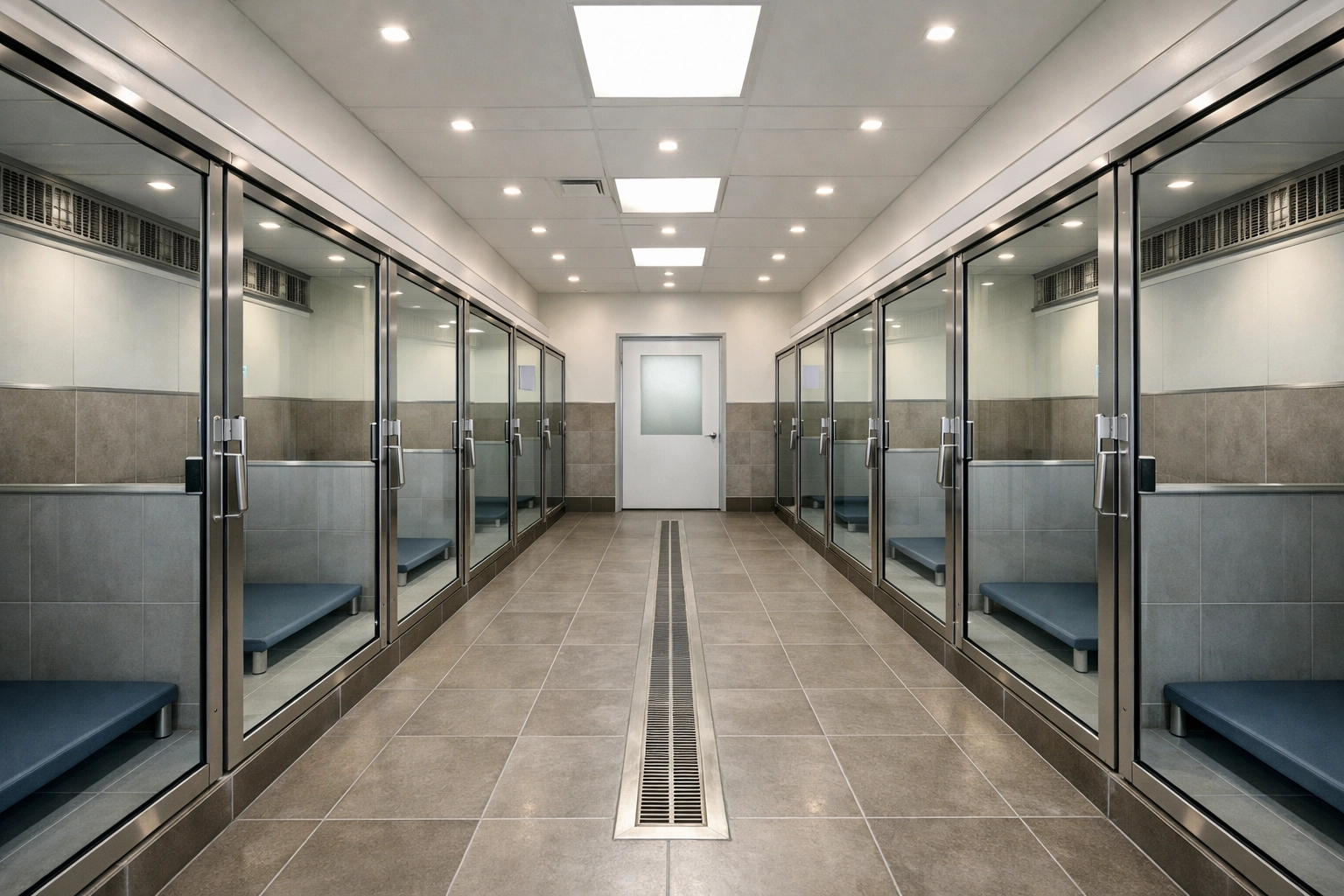
Your facility is likely your largest investment. Between specialized flooring that’s easy on paws (and easy to clean), climate control systems, and high-end drainage, your property needs more than just a standard “office” policy.
Consider these “Pet Care Specific” property risks:
-
Deep Sanitization Costs: If a highly contagious virus hits your facility, you might be required by local health authorities to shut down and perform an industrial-grade cleaning. This isn’t just a cleaning bill; it’s a loss of income.
-
Emergency Relocation: If a pipe bursts in the middle of a Northern Kentucky winter, where do the 40 dogs currently boarding with you go? Specialized policies can help cover the cost of relocating your “guests” to a safe facility while repairs are made.
-
Equipment Breakdown: If your HVAC fails during a 95-degree Cincinnati July, you don’t just have an uncomfortable office, you have a life-safety crisis for the animals.
Curious how your current property limits stack up? You can always request a policy review with us to see where you might be vulnerable.
Workers’ Compensation: Because Paws Are Powerful
Your staff are the lifeblood of your business. They are also the ones most at risk. In the pet care industry, Workers’ Comp isn’t just about “slip and fall” incidents. It’s about:
-
Animal Bites and Scratches: Even the best-trained handler can be nipped during a high-energy moment.
-
Zoonotic Diseases: These are illnesses that can pass from animals to humans, like ringworm or certain respiratory infections.
-
Physical Strain: Lifting a 90-pound senior dog or managing four energetic pups on leashes takes a toll on the body.
In Kentucky, having clear, industry-specific language in your Workers’ Comp policy ensures that your employees are taken care of and that your business is protected from the staggering costs of medical claims and lost wages.
The Value of a Local Advocate
We live in an age where you can buy insurance with three clicks on a smartphone. It’s tempting. But when a Great Dane accidentally knocks over a toddler in your lobby, or a rescue dog manages to jump a six-foot fence, you don’t want to be calling a 1-800 number and talking to someone in a call center who doesn’t know the difference between Kenton and Campbell County.
An independent agent, a neighbor, understands the local landscape. We know the local vets, we understand the regional weather risks, and we know which specialized carriers actually pay out when a claim is filed. We don’t just sell you a policy; we help you build a risk management strategy.
Imagine your business running smoother because you’re not worried about the “what ifs.” You’re focused on the “what’s next”, whether that’s expanding your grooming wing or adding a new outdoor agility park.
Action Steps for Your Pet Care Business
Whether you’re just starting your daycare journey or you’ve been a staple in the community for a decade, here are three things you can do this month to tighten your safety net:
-
Today: Check your current policy for “Animal Bailee” or “Care, Custody, and Control” limits. If that number is $0 or isn’t listed, please call us immediately.
-
Tomorrow: Review your client intake forms. Ensure you have clear language regarding vaccination requirements and a signed “Authorization for Emergency Medical Care.”
-
This Month: Schedule a walk-through of your facility with an eye for “property risks.” Are your water sensors working? Is your backup generator (if you have one) ready for a Kentucky ice storm?

Frequently Asked Questions
Q: Does my homeowner’s insurance cover my small, home-based boarding business?
A: Almost certainly not. Most homeowner policies specifically exclude “business pursuits” conducted on the premises. If a dog in your home-based daycare bites a neighbor, you could be left entirely on your own. You need a dedicated commercial policy.
Q: I only do “daycare,” not overnight boarding. Do I still need specialized coverage?
A: Yes. In fact, daycare can sometimes be higher-risk because of the high energy and constant social interaction of “group play.” Most incidents happen during active play, not while dogs are sleeping in crates.
Q: How much does specialized pet care insurance cost?
A: It varies based on your volume and location, but for many small to mid-sized Kentucky facilities, the peace of mind costs less than the revenue from one or two “regular” boarding clients. It’s an investment in your business’s longevity.
Q: What if I offer grooming or training as well?
A: Those require their own “Professional Liability” endorsements. Professional liability covers you if a dog is injured by a clipper slip during a groom or if a training method is blamed for a behavioral issue.
If you’re feeling like your current coverage is more of a “best guess” than a solid plan, we’d love to chat. We help businesses across Cincinnati and Northern Kentucky find the right fit, so they can get back to the best part of the job: the dogs. Let’s talk about your facility today.